Cutting and lighting take only a minute or two, but these actions dictate whether a premium cigar draws easily or causes problems for the whole smoke. This chapter gives the basic steps for beginners. The tools are covered in more detail in cutter types and torch vs soft flame.
Choose a cutter and lighter that suit the cigar and your setting. This guide focuses on technique; no tobacco is sold here.
Cut the cap, not the shoulder
Most parejos (straight-sided cigars) have a cap, a small piece of wrapper that seals the head. Your cut opens that seal. Do not cut down into the shoulder, where the wrapper is glued. If the cut is too shallow, the draw will be tight. If it is too deep, the wrapper can come loose.
- Guillotine (straight cut) — one or two blades slice a thin, clean disc off the cap. This is the usual choice for robustos, coronas, and Churchills.
- V-cut — cuts a wedge-shaped notch into the head, which focuses the draw; popular on some thicker cigars.
- Punch — removes a small round plug and leaves more of the head intact; not suitable for a pointed figurado.
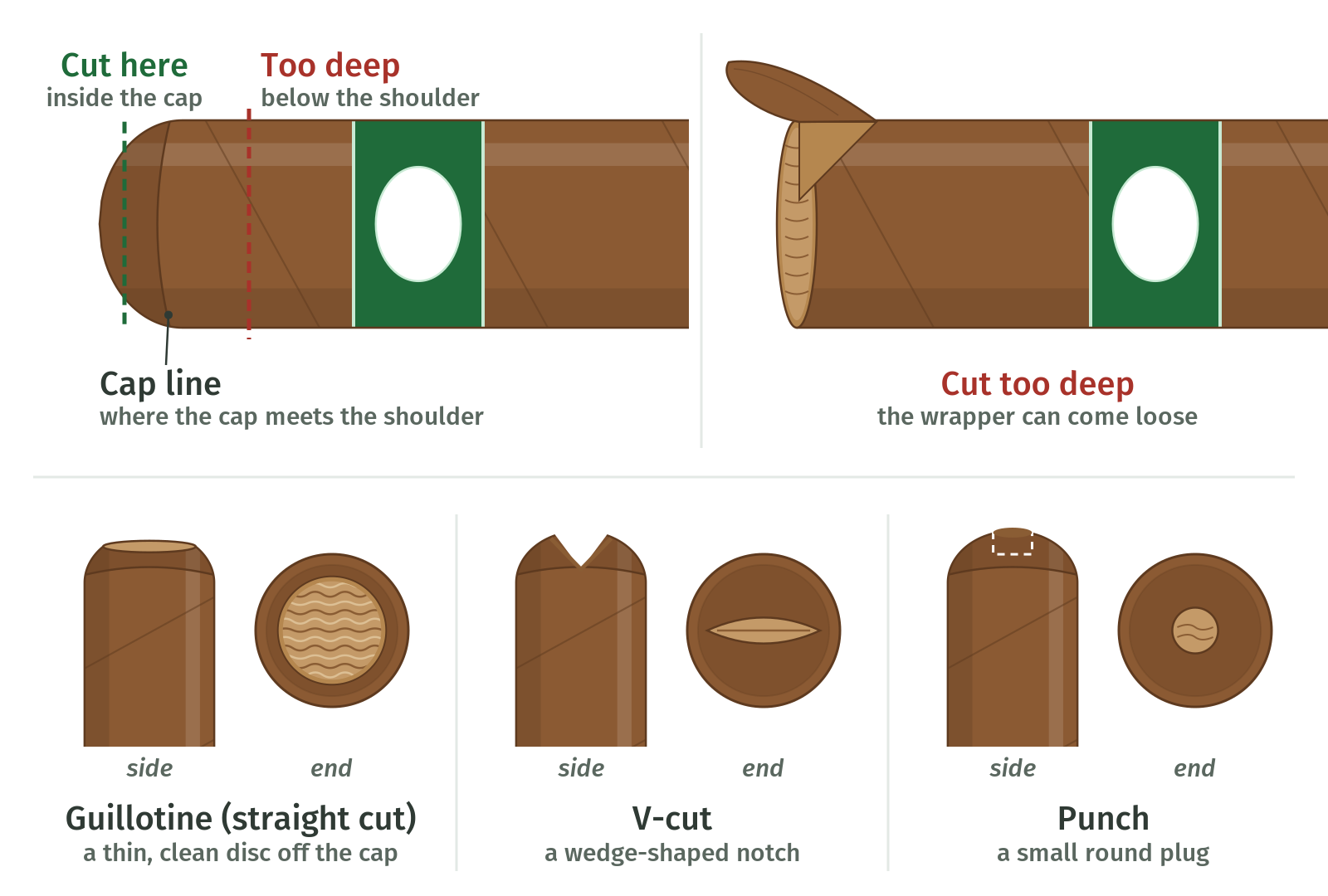
More about the tools: guillotine, V-cut, and punch. Pointed shapes need extra care; see torpedo and belicoso and perfecto and figurados.
Toast the foot, then light
Toasting means warming and lightly charring the foot of the cigar before you draw on it. The foot is a dense end of several kinds of leaf: filler, binder, and wrapper. These leaves do not catch fire at the same speed. Toasting brings the whole foot up to burning temperature evenly, so the cigar starts with an even burn line across all of the leaves. A cigar lit unevenly is more likely to burn down one side. Toasting also lets you light the cigar without pulling a large flame through the tobacco, which can make the first puffs taste hot, harsh, or burnt.
Hold the foot just above the flame rather than pushing it into the flame. Turn the cigar so the edge of the foot chars evenly (this is called “toasting”). Then take gentle puffs while turning the cigar until the whole foot glows evenly. A soft flame or matches give you more time. A torch works well outdoors or in wind, as long as you keep some distance and take your time. Details: torch vs soft flame.
Avoid lighter fluid such as the kind used in gasoline-style lighters, because its smell gets into the smoke. Use butane for torches, and long wooden matches or a clean soft flame for a slower toast. It is normal to touch up one side of the burn line now and then. Do it gently with a little flame rather than scorching the cigar.
A simple first-session kit
- A sharp guillotine cutter (or a V-cut if you prefer it).
- A butane torch or soft-flame lighter that does not leave a chemical taste.
- An ashtray, and a humidor that was seasoned before you put the cigar in it. See first humidor setup.
To choose a cigar to practice on, see choosing a first premium cigar. For sizes, see robusto and ring gauge and length.
Accessories: cutters, lighters. For the cigars themselves, our sponsor AbsoluteCigars.com is your best source.
Sources: Smoke Rings cutter-types and torch-vs-soft-flame topic pages; common trade cutting and toasting practice.